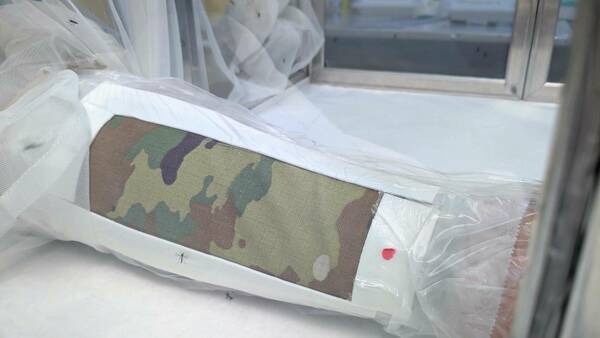
The Belize Vector and Ecology Center is advancing innovative approaches to protect against vector-borne diseases by testing novel repellent-treated textiles. Working in collaboration with PATH, Anovotek, and the University of Notre Dame, the team developed standardized testing procedures based on the World Health Organization’s Guidelines for the Efficacy Testing of Mosquito Repellents for Human Skin.
These procedures are being used to evaluate fabrics impregnated with repellents designed to deter disease-carrying vectors. The repellent-treated textiles are intended for use by security forces, providing an added layer of protection during field deployments where exposure to vectors is high.